Guava Icons Reviewed for Embroidery Projects
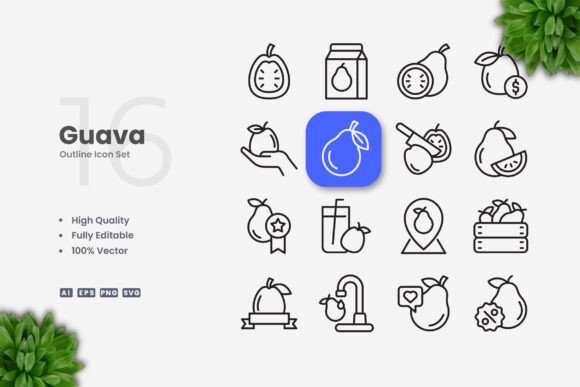
I opened the Guava Icons set expecting simple shapes, and that is exactly what I got. The collection leans into minimalism with a soft, approachable mood that feels friendly without being childish. The icons have a rounded, gentle geometry that immediately made me think of nursery decor, baby apparel, and warm boutique branding. There is nothing harsh or overly technical here. If you design embroidered gifts or handmade products that need to feel personal and easygoing, this set gives you a strong starting point.
The description frames Guava Icons as a digital asset for websites, social media, infographics, and print work. That origin matters when you evaluate it for machine embroidery. Digital icons do not always translate cleanly into thread because what looks crisp on a screen can turn muddy under high stitch density. Still, the simplicity of these outlines and solid shapes gave me some real confidence. When I mentally converted the clean strokes into running stitch paths and the filled areas into satin or fill stitch zones, the structure held up. The shapes are large enough in their core geometry to scale within common hoop sizes without collapsing into a tangled mess of tiny stitches.
First Impressions and Mood of the Design
Guava Icons brings a relaxed, modern silhouette to whatever it touches. The shapes feel organic but controlled. I imagined this on a cream kitchen towel, stitched in a single muted thread color, maybe sage green or terracotta. The mood is calm, intentional, and uncluttered. For small business owners making boutique home goods, that kind of visual restraint can be a serious selling point. Customers looking for minimalist embroidered pillow covers or simple tote bag accents would connect with this aesthetic immediately.
Where some icon sets feel corporate and stiff, Guava Icons has a hand-drawn softness. The rounded corners and even stroke weights communicate warmth. That matters when you are selling a handmade product because the design itself should reinforce the human touch of embroidery. A cold, overly precise icon can fight against the organic texture of thread. This set complements it.
How Guava Icons Behave in Real Embroidery Scenarios
When I evaluate any machine embroidery design, I mentally run it through a list of common products I have actually stitched. For Guava Icons, the first thing I pictured was a set of baby onesies. The gentle shapes would sit beautifully on soft cotton fabric with a light stabilizer underneath. The line-based icons could use a simple running stitch that keeps the fabric flexible, which is critical for baby clothes that get pulled, washed, and worn against sensitive skin. A heavy fill stitch would stiffen the area and feel scratchy, so running stitch conversion is the smarter path here.
Tote bags were the second obvious match. A single Guava icon centered on a canvas tote in matte thread would look understated and modern. I have sold totes with minimalist designs at craft fairs, and buyers consistently gravitate toward clean shapes over busy compositions. The simplicity of Guava Icons leaves room for the texture of the fabric and the sheen of the thread to do the heavy lifting. That is a sign of a design asset that understands restraint.
For embroidered patch projects, these icons could work on a small scale with one important caveat: you need to test whether the details hold at patch size. Patches often need a border or a felt backing, and the icon's outer contour needs to be clear enough to define the patch edge. I would trace the main silhouette, add a narrow satin stitch border, and finish it with a heat-seal backing. The result would be a boutique-quality patch that fits on caps, jackets, or bag flaps.
On sweatshirt embroidery, these icons would sit well on the left chest or the cuff. The low-detail approach works in your favor on fleece and knit surfaces because heavy stitch density can sink into the nap. A clean icon with open spaces allows the fabric to breathe and reduces puckering. I would use a medium-weight cutaway stabilizer and stick to two thread colors at most. Sometimes the best-selling custom apparel pieces are the quiet ones, and Guava Icons fits that philosophy.
Stitching Clarity and Fabric Considerations
Not every fabric welcomes a thin line. If you stitch Guava Icons on a textured weave like linen or a loosely knitted scarf, expect some wobble in the finer strokes. The icon outlines look clean on screen, but in thread, a one-millimeter stroke can disappear into the fabric grain or become jagged. Stitch density and underlay settings will make or break the final result. I always test new designs on a scrap of the actual fabric first, especially when the design relies on delicate linework like this set does.
Dark fabric presents another challenge. Icons that pop on a white background can lose all definition on navy or black cotton. If you plan to stitch Guava Icons on dark garment blanks, you need high-contrast thread. A pale peach or warm beige thread on charcoal fabric feels sophisticated, but test thread sheen too. Matte threads blend into dark backgrounds faster than glossy rayon. The same icon can look crisp one way and completely washed out another way. Make that part of your sampling routine before listing anything in your Etsy shop.
Stretchy fabrics like jersey t-shirts need a firm stabilizer and possibly a topping layer to keep the stitches from sinking. Because many icons in this set have open negative space, the fabric can peek through in intentional ways. That can be beautiful when planned, but if the fabric stretches after stitching, the negative space distorts and the icon loses its proportions. A properly hooped test piece will tell you everything you need to know.
Small Details and Stitch Type Decisions
Converting a digital icon set into an embroidery file means making intentional stitch type decisions. For Guava Icons, the outlined shapes translate naturally into running stitch paths. Keep the stroke weight consistent during digitizing, and do not be tempted to add unnecessary fill stitching to what is meant to be an open line drawing. The charm is in the airy feel. Where the original design has small filled areas, a light fill stitch with low density preserves softness. Avoid dense satin stitch on small internal shapes because the needle perforation can chew up delicate fabric and leave tiny holes around the stitching.
One thing the product description mentions is the ability to resize, change color, or edit stroke weight. That flexibility is genuinely useful for embroidery preparation. You can scale the icon to fit your hoop size, test different widths, and see what survives the conversion. If a detail is too fine at four inches but perfect at six inches, you know your minimum size limit. Write that down in your project notes so you do not accidentally promise a customer a tiny stitched icon that fails.
Product Value and Customer Perception
From a selling standpoint, Guava Icons adds a clean design language to your product line. If your craft business currently offers busy floral patterns or dense typography, adding minimalist icon options diversifies your catalog. Some buyers specifically look for simple embroidered goods because they match modern home aesthetics. A pillow cover with one small Guava icon in the corner feels curated and intentional. That type of product photographs beautifully for Etsy listings, too. The negative space frames the stitching and gives thumbnail images a clear focal point, which boosts click-through rates.
Personalized gift makers will find these icons useful for monogram companions or subtle decorative accents. A baby blanket with a small icon near the corner next to the child's name feels polished without being loud. For wedding gifts, a linen napkin set with matching icons stitched in a tonal thread color feels elevated and memorable. The perceived value comes from the combination of thoughtful design and clean execution.
Brand consistency matters if you sell across multiple product types. Using Guava Icons as a unifying element on totes, aprons, tea towels, and pillow covers creates a cohesive collection. Buyers who purchase one item and love it will recognize your style in the next product they see. That recognition builds trust and repeat sales.
Practical Notes for Embroidery Designers
Before you digitize Guava Icons for commercial embroidery, confirm the licensing terms. The product description clearly positions this as a digital graphic asset for websites, apps, and print work. That does not automatically mean you are allowed to stitch it onto products and sell them. Contact the seller or read the license agreement carefully. Some designers permit finished physical product sales, others limit usage to digital mockups and presentations. Do not assume. A quick licensing verification protects your business from copyright headaches later.
Test the design in monochrome first. A black and white mockup reveals whether the icon silhouette reads clearly without color cues. If the shape gets confusing in a single thread color, customers will squint at it on the final product. The best digital embroidery file conversions start with a strong silhouette test.
Check your hoop size against the intended stitch area. Even if the icon fits, you need enough margin around the design for proper hooping and stabilizer adhesion. A two-inch icon in a four-inch hoop leaves room for that margin. Pushing boundaries leads to misalignment and wasted blanks. For caps and curved surfaces, centering and positioning become trickier. Test on a similar curve before committing to a bulk order.
Thread color selection deserves its own planning session. Guava Icons has a gentle personality that pairs well with muted tones, but do not be afraid to test bold contrast too. A crisp white icon on a navy apron, or metallic gold on a dusty pink pillow cover, changes the mood completely. Keep thread swatches near your workstation and lay them against your test fabric under good lighting before winding a bobbin.
Proper stabilizer use cannot be overstated. For baby embroidery and apparel that touches skin, choose a soft tear-away or a lightweight cutaway that does not leave a scratchy residue. For home decor items like pillow covers that will be washed often, a quality cutaway stabilizer prevents long-term distortion. The design itself may be simple, but the foundation beneath it determines how it ages.
Where Guava Icons Shines and Where to Be Careful
This design set performs best on smooth, medium-weight fabrics with a stable weave. Cotton canvas, linen blends, quilting cotton, and twill are your safest bets. Products like aprons, tea towels, tote bags, and structured pillow covers show off the clean lines without fighting the fabric. The icons also work nicely for printable mockups and product previews, which are essential for Etsy sellers who want to display their embroidery designs on digital listings before stitching a physical sample.
Be cautious with very small hoop sizes. A one-inch version of a detailed icon may lose the inner spaces and look like a blob. Conduct a minimum size test on your specific machine and fabric combination. Record that minimum in your design notes so you do not accidentally undersize a customer order.
Textured fabrics like terry cloth, fleece with a deep pile, or loosely woven scarves will blur the stroke edges. If you must stitch on these surfaces, increase the stroke width slightly and use a topping stabilizer to keep the stitches on top of the fibers rather than buried within them. The result will not be as razor-sharp as on flat cotton, so set expectations accordingly.
Frequent washing affects thin linework more noticeably than dense fills. A running stitch outline on a kitchen towel that goes through fifty wash cycles may start to look fuzzy. Using polyester thread rather than rayon improves durability here. Inform your customers about care instructions: wash inside out, use a gentle cycle, and avoid high heat drying. Clear care cards add a professional touch to every order.
Final Thoughts on Using Guava Icons for Embroidery
Guava Icons earns its place in a thoughtful embroiderer's design library. Its clean shapes, friendly mood, and flexible scaling make it suitable for a range of handmade product categories. The real work lies in the digitizing decisions you make before the needle drops. Test stroke weights, respect minimum size limits, choose thread colors with intention, and always verify the license before selling finished items. The design itself provides a beautiful framework. Your skill turns that framework into something stitched, lasting, and ready for a customer to love.
For Etsy sellers, craft fair vendors, and small shop owners who want to add a refined minimalist look to their embroidery catalog, Guava Icons is a smart starting point. Its origin as a digital graphic does not limit it. With the right conversion approach and honest testing, these icons feel right at home on fabric, thread, and finished goods that real people will use every day.