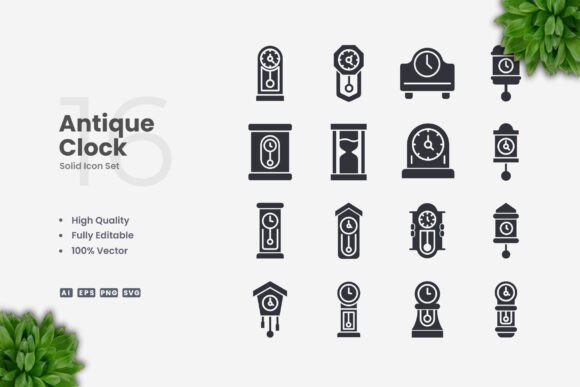
Antique Clock Solid Icons for Embroidery Projects
When I first opened the Antique Clock Solid Icons set, I felt that quiet pull of a design that understands restraint. These are not fussy, over-detailed clock faces. They are stripped down to silhouette thinking, the kind of icon work that reads clearly from across a room. For an embroidery designer, that clarity matters more than most people realize. A shape that holds its ground as a solid form, without relying on interior line work, can translate into stitch with far fewer headaches than something overly intricate. The mood here is heritage with a modern hand, old enough to feel meaningful, clean enough to feel current.
What This Design Brings to the Embroidery Table
The Antique Clock Solid Icons carry a visual personality that sits somewhere between vintage shop signage and minimalist heirloom. The solid construction means the clock faces read as confident silhouettes first, which is exactly what you want when thread hits fabric. In embroidery, thin lines can get swallowed by texture, but a well-proportioned solid shape holds its own on everything from canvas totes to waffle weave kitchen towels. The antique clock theme naturally leans into sentiments around time, memory, and nostalgia, which makes these icons surprisingly versatile for personalized gifts. Think anniversary dates, birth times, memorial pieces, or simply that warm timeless aesthetic that sells well at craft fairs.
From a pure design perspective, the simplicity here is the main event. There is no clutter competing for attention. The clock hands, the outer rim, the subtle shaping of the numerals or markers all exist within one unified silhouette. That kind of cohesion means fewer color changes if you are digitizing for machine embroidery, and a cleaner finished product whether you are stitching a patch, a pocket accent, or a centerpiece motif on a pillow cover.
How It Might Look on a Real Finished Product
I spent some time picturing these clock icons on a natural linen tote bag, the kind of project a small shop owner might list on Etsy for forty dollars and feel good about. With the Antique Clock Solid Icons, you could easily build a whole product story around the concept of slowing down, making time, or cherishing moments. A single large clock icon centered on a tote in deep charcoal thread against oatmeal fabric would look intentional and quietly elegant. Add a short phrase underneath in a complementary font, and you have a cohesive boutique item that photographs beautifully for listings.
On a unisex sweatshirt, the solid icon approach works especially well. Busy designs on crewneck fleece can look muddy after washing, but a bold singular clock silhouette stitched in a satin finish holds its integrity. I can picture the Antique Clock Solid Icons scaled to about four inches wide, placed on the upper left chest, stitched in a muted gold or ivory thread on a heather gray or forest green sweatshirt. That kind of understated placement appeals to customers who want something personal but not loud. It also reduces stitch time and thread usage, which matters when you are producing multiple units for a market or holiday rush.
Where an Embroidery Designer Should Pause and Test
Even with a clean icon design, there are real-world fabric situations that deserve caution. The solid nature of these clock icons means density becomes the conversation. If you take the graphic as-is and convert it directly to a fill stitch without adjusting density for the fabric underneath, you risk puckering on lightweight cotton or pulling on stretchy jersey. I would absolutely run a test on a scrap of the exact fabric blend before committing to a final piece. This is not a flaw in the design itself, it is just the reality of translating any solid vector icon into thread.
Small hoop sizes also need consideration. While the icons can likely be scaled down, extremely tiny versions on a baby onesie or a narrow cap brim might lose the subtle distinctions between clock hands and outer rings. On a structured baseball cap, the curved surface can distort a perfectly circular clock face if you are not careful with hooping and placement. I would lean toward using these icons at a moderate scale on flatter surfaces like tote bags, pillow covers, tea towels, and the back panel of a denim jacket, rather than fighting the geometry of a curved cap crown.
Dark fabric presents another layer of thought. A solid clock icon stitched in a light thread on black canvas will read beautifully from a distance. But if the thread color is too close to the fabric, that antique personality might fade into the background. Contrast is your best tool here, and the Antique Clock Solid Icons give you the freedom to play with that contrast because the shapes are so uncluttered.
The Giftability Factor and Customer Perception
One thing I always evaluate when reviewing a design for embroidery use is whether the finished product will feel like something someone actually wants to receive. The antique clock theme has broad appeal. It works for wedding gifts with the couple's date stitched beneath, for milestone birthdays, for retirement presents, and even for sympathy pieces that honor a loved one's memory. Buyers on Etsy and at craft shows often gravitate toward designs that carry meaning without being overly literal. The Antique Clock Solid Icons deliver that balance well. The product feels substantial, not novelty, and that distinction affects how much someone is willing to pay for a finished embroidered item.
From a branding standpoint, small shop owners who lean into a cohesive aesthetic will find these icons easy to integrate across multiple products. The same clock motif can appear on a tea towel, a matching apron, a set of napkins, and a tote bag for a coordinated kitchen or gift bundle. Consistency builds buyer trust, and the solid icon style from this set makes that repetition feel intentional rather than repetitive.
Stitching Behavior and Material Sensitivity
Textured fabrics like terry cloth, fleece, or loosely woven linen can challenge any design that relies on crisp outer edges. With the Antique Clock Solid Icons, the outer rim of the clock is the defining feature, and any wobble or sinking into plush fabric will immediately soften the intended silhouette. I would recommend using a quality cutaway stabilizer on stretchy or textured substrates, and possibly adding a light underlay stitch beneath the main fill to give the edges something to anchor onto. On smooth quilter's cotton or canvas, the results should be far more predictable and sharp.
If you plan to use these icons on baby items like bibs or onesies, washability is the first thing on a parent's mind. A dense solid stitch on a onesie that gets washed twenty times in the first month needs to survive without distortion. Testing wash cycles on your sample is non-negotiable. I have seen beautifully digitized designs pull and warp after repeated laundering simply because the stitch density was not dialed in for the fabric's recovery ability. The design itself is not the variable there, it is the execution, and the Antique Clock Solid Icons deserve that careful preparation.
Commercial Use and the Small Business Reality
For creative entrepreneurs selling finished embroidered goods, licensing clarity is everything. Before you stitch these icons onto products for sale, confirm the commercial usage terms with the original source. The product description mentions the design is intended for websites, mobile apps, books, social media, and print materials as a Graphics asset in the Icons category. That means it is not delivered as a ready-to-stitch embroidery file. You will need to digitize the artwork for machine embroidery yourself or work with a digitizer, and you must verify that the license allows derivative physical products if that is your end goal. Never assume digital art licenses automatically extend to embroidery production. That step protects your business and respects the original designer's rights.
For those using these icons purely as visual design assets for printable mockups, product previews, or branding for an embroidery shop, the path is much more straightforward. The clean lines and solid construction make the Antique Clock Solid Icons excellent for watermark-free listing images, social media graphics, and packaging inserts. A consistent visual identity across your shop front and your actual stitched products builds a professional presence that customers recognize and return to.
Where the Design Shines Brightest
After sitting with this icon set for a while, I keep returning to a few specific project types where the Antique Clock Solid Icons would genuinely elevate the final product. Kitchen textiles are high on that list. A linen tea towel with a single clock icon and a family name creates a housewarming gift that feels curated rather than generic. Embroidered patches for jean jackets or canvas backpacks are another strong application, especially if you want a patch that looks handcrafted without being overly complicated to stitch out in multiples.
Wedding and anniversary products deserve a special mention. The timelessness of a clock paired with a significant date makes for a deeply personal embroidered hoop art piece or ring bearer pillow detail. Boutique owners who sell at bridal markets or through wedding-focused Etsy categories would find these icons easy to build an entire collection around, mixing and matching with floral accents or delicate lettering without the clock competing for attention.
The simplicity also makes the Antique Clock Solid Icons a strong candidate for tone-on-tone embroidery, where the thread color closely matches the fabric for a subtle embossed effect. That sophisticated look performs beautifully on high-end home decor items like velvet pillow covers or linen table runners, where the customer values texture over contrast.
Practical Recommendations Before You Stitch
If you are an embroidery designer, a craft business owner, or a maker planning to use this design, here is my honest shortlist of preparation steps. First, open the vector file and examine the smallest details at the size you intend to stitch. Look at the space between clock hands, the width of any rim elements, and how those details will translate to thread width. Second, print a test template on paper and place it on your fabric to confirm scale and placement before you digitize anything. Third, stitch a sample on the actual fabric with the actual stabilizer you plan to use for production. Fourth, wash that sample. Then wash it again. Only then can you feel confident about what your customer will receive.
Check your hoop size against the scaled design and leave at least an inch of clearance on all sides for proper hooping tension. If you are selling finished products, photograph the stitched sample in natural light to see how the solid icon reads in listing images. The Antique Clock Solid Icons have the kind of graphic confidence that should photograph well, but only if the stitching is clean and the fabric is free of puckering.
Final Thoughts on the Design's Real-World Value
What I appreciate most about the Antique Clock Solid Icons as a starting point for embroidery work is the room it leaves for the maker. The design does not try to do everything itself. It gives you a strong, recognizable shape and trusts you to decide the thread palette, the placement, the scale, and the fabric pairing. For embroidery designers who want to build a product line with a consistent visual thread, this icon set offers a solid anchor. For small shops looking to create personalized gifts that feel intentional, the antique clock theme carries emotional weight without requiring explanation. And for anyone navigating the space between digital design assets and tangible handmade products, these icons represent a thoughtful place to begin, provided you do the testing, check your licenses, and respect the material you are stitching into.